
The DeWalt DW716 vs DeWalt DWS779 are two of the most popular 12-inch compound miter saws in DeWalt’s lineup, each designed to cater to slightly different professional and DIY needs. The DW716 is a dual-bevel compound miter saw known for precision and versatility, while the DWS779 is a sliding compound miter saw that emphasizes cutting capacity for larger stock.
In this detailed comparison, we break down every feature, from motor performance and cutting capacity to bevel ranges and portability, to determine which saw provides the best value for serious woodworkers and contractors.

Contents
Differences Between DeWalt DW716 vs DeWalt DWS779
Motor Power and Blade Speed
The DW716 is powered by a 15-amp motor with a blade speed of 3,600 RPM, offering strong torque for cutting both hardwoods and softwoods. This saw was designed to deliver consistent performance in demanding jobsite conditions.
The DWS779, also equipped with a 15-amp motor, increases blade speed to 3,800 RPM. This slightly higher speed results in smoother cuts, particularly beneficial for fine woodworking projects and detailed trim work. Both saws are powerful, but the DWS779’s higher RPM gives it an edge for smooth finishes.
Winner: DeWalt DWS779 – Faster blade speed delivers smoother cuts with equal cutting power.
Cutting Capacity and Versatility
The DW716 handles 2 x 8 lumber at 90° and 2 x 6 at 45°, while supporting 6.5-inch vertical baseboards and 6.625-inch crown molding nested. This makes it an excellent choice for trim carpentry and medium-scale framing projects.
The DWS779, with its sliding rails, significantly expands cutting capacity, handling 2 x 14 lumber at 90° and 2 x 10 at 45°. It can cut 6.75-inch baseboards vertically and 7.5-inch crown molding nested, making it the superior option for large trim projects, wide boards, and framing lumber.
Winner: DeWalt DWS779 – Sliding rails offer far greater cutting capacity.

Miter and Bevel Adjustments
The DW716 features a 50° miter range left and right, supported by 11 positive stops for quick adjustments. Its dual-bevel system tilts 48° left and right, allowing compound cuts without flipping material.
The DWS779 offers a 60° miter range to the right and 50° to the left, with 10 positive stops. It also features a dual-bevel system up to 48° both directions, giving it flexibility in compound cutting. Although it has fewer detents, its extended right-side miter range provides more options for angled cuts.
Winner: Tie – DW716 provides more detent stops for precision, while DWS779 offers a wider right miter range.
Precision and Accuracy
The DW716 includes a stainless-steel detent plate with 11 positive stops, ensuring long-lasting accuracy and repeatable cuts. Its tall sliding fence system supports large pieces of trim and molding with stability.
The DWS779 also uses a stainless-steel detent plate with durable positive stops, though it has 10 instead of 11. Its precision is further enhanced by the sliding system, which allows longer cuts without repositioning. Both saws deliver reliable accuracy, but the sliding mechanism adds flexibility for larger material.
Winner: DeWalt DWS779 – Extended crosscut precision gives it the edge in accuracy.
Build Quality and Portability
The DW716 weighs 44 lbs, making it significantly lighter and easier to transport between job sites. Despite its portability, it maintains rugged build quality with a stable frame and durable fences.
The DWS779, at 67 lbs, is much heavier and less portable. However, its solid construction ensures stability during large crosscuts and heavy-duty framing work. It is better suited for stationary setups rather than frequent transport.
Winner: DeWalt DW716 – Lightweight portability makes it the better choice for contractors on the move.

Dust Collection Efficiency
The DW716 includes a rear dust port that can be attached to a vacuum or dust bag. Its efficiency is average, capturing a portion of sawdust but leaving fine particles behind.
The DWS779 uses the same rear port system, but due to its sliding design, dust collection is often less effective as more sawdust escapes. While functional, both saws could benefit from improved dust management.
Winner: DeWalt DW716 – Slightly better dust capture efficiency due to its non-sliding design.
Ease of Use and Adjustability
The DW716 is simple, intuitive, and reliable, with smooth bevel adjustments and a cam-lock miter handle. Its lighter weight and compact footprint make it easier to maneuver and set up, especially for trim carpenters.
The DWS779, while heavier, provides more versatility with its sliding rails. Once set up, it handles large-scale cuts more efficiently. However, its weight and size require more space and effort for transport.
Winner: Depends on user needs – DW716 is easier to use for portable tasks, while DWS779 excels in fixed workshop setups.
Quick Rundown Of DeWalt DW716


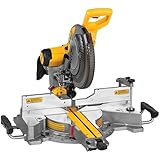
Quick Rundown Of DeWalt DWS779

Conclusion
The DeWalt DW716 and DeWalt DWS779 are both professional-grade miter saws built to handle precision carpentry and demanding jobsite applications. The DW716 shines with its lightweight portability, dual-bevel versatility, and precision-focused design, making it ideal for trim carpenters and contractors who need a reliable saw they can easily transport.
The DWS779, on the other hand, excels with its sliding capacity, extended miter range, faster blade speed, and larger crown molding support, making it the better choice for stationary setups, framing projects, and wide material handling.
Overall Winner: DeWalt DWS779 – With superior crosscut capacity, higher RPM motor, and greater versatility for large-scale projects, the DWS779 outperforms the DW716 as the best long-term investment for professionals who require maximum cutting power and capacity.