
The DeWalt DW715 vs DeWalt DW716 are two highly popular 12-inch compound miter saws that have earned their place in both professional workshops and home garages. While both models deliver power, precision, and durability, they serve slightly different needs.
The DW715 is a single-bevel compound miter saw, offering excellent value and reliability, whereas the DW716 introduces dual-bevel functionality, giving users more versatility for complex projects. In this in-depth comparison, we analyze every feature in detail to determine which saw provides the most long-term value.

Contents
Differences Between DeWalt DW715 vs DeWalt DW716
Motor Power and Cutting Performance
The DeWalt DW715 is equipped with a 15-amp motor that spins at 4,000 RPM, delivering strong performance for crosscuts, bevels, and miter cuts. Its higher blade speed gives it a slight advantage in cutting smoother edges, particularly on hardwoods and trim pieces.
The DeWalt DW716, also powered by a 15-amp motor, operates at 3,600 RPM. While slightly slower in terms of blade speed, it compensates with the flexibility of dual-bevel functionality. Its cutting power remains excellent, capable of handling tough stock while maintaining accuracy.
Winner: DeWalt DW715 – Slightly higher RPM provides smoother cutting performance, especially in finish carpentry.
Cutting Capacity and Versatility
The DW715 handles 2 x 8 lumber at 90° and 2 x 6 at 45°, with the ability to cut baseboards up to 6.5 inches vertically and crown molding up to 5.25 inches nested. This makes it highly effective for trim carpentry, though it is more limited when cutting larger crown molding profiles.
The DW716 matches with 2 x 8 crosscut capacity at 90° and similar vertical baseboard support but extends its crown molding ability to 6.625 inches nested. This increased molding capacity is a significant advantage for professionals working on more complex interior trim projects.
Winner: DeWalt DW716 – Greater crown molding capacity gives it the edge in trim versatility.

Miter and Bevel Adjustments
The DW715 features a 50° miter range to both the left and right, with 11 positive detents for commonly used angles. Its single-bevel design tilts 48° to the left only. While functional for most tasks, it requires flipping the workpiece when beveling in the opposite direction, which can slow workflow.
The DW716 improves significantly with its dual-bevel design, tilting 48° left and right. This allows compound cuts to be made without repositioning the material, saving time and improving precision. Its miter range also reaches 50° in both directions, supported by 11 detent stops for fast angle setup.
Winner: DeWalt DW716 – Dual-bevel capability makes it far more versatile for compound cuts.
Precision and Accuracy
The DW715 includes a stainless-steel detent plate with 11 positive stops, ensuring repeatable accuracy for miter cuts. Its tall sliding fence stabilizes larger stock and allows precise cuts in baseboards and crown molding.
The DW716 also features a stainless-steel detent plate with the same number of stops but adds the advantage of dual-bevel accuracy. By allowing left and right bevels without flipping stock, it reduces user error and increases overall efficiency.
Winner: DeWalt DW716 – Dual-bevel functionality enhances precision for complex joinery and trim work.
Build Quality and Portability
The DW715 weighs 42 lbs, making it slightly lighter than the DW716. Its compact design and manageable weight make it easier to carry to jobsites and move around a workshop. Built with DeWalt’s rugged construction standards, it holds up well under daily use.
The DW716, at 44 lbs, is only marginally heavier but still portable. Its slightly larger frame offers greater stability, making it a better option for larger projects requiring consistent accuracy.
Winner: Tie – The DW715 is more portable, while the DW716 offers enhanced stability.

Dust Collection Efficiency
Both the DW715 and the DW716 are equipped with a rear dust collection port designed to connect to a dust bag or shop vacuum. Their performance is similar, collecting a portion of sawdust but leaving fine dust behind. Neither saw is outstanding in this area compared to higher-end systems but remains functional for most users.
Winner: Tie – Dust collection is average on both models, with no significant differences.
Ease of Use and Adjustability
The DW715 is simple to operate with intuitive controls and a reliable cam-lock miter handle. Its single-bevel design is easy to understand, making it beginner-friendly while still offering professional results.
The DW716, with its dual-bevel design, requires slightly more familiarity but offers much greater efficiency once mastered. Professionals benefit from reduced material handling, while hobbyists enjoy the convenience of cutting both bevel directions without flipping workpieces.
Winner: DeWalt DW716 – Dual-bevel design significantly enhances usability for complex projects.
Quick Rundown Of DeWalt DW715
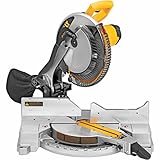

Quick Rundown Of DeWalt DW716

Conclusion
The DeWalt DW715 and the DeWalt DW716 are both excellent miter saws, built with DeWalt’s reputation for durability and precision. The DW715 excels in affordability, portability, and faster blade speed, making it an excellent choice for budget-conscious buyers or those who need a reliable single-bevel saw for standard trim and framing tasks.
The DW716, however, clearly stands out with its dual-bevel design and increased crown molding capacity, making it a more versatile and professional-grade option. While it comes at a higher price and slightly heavier build, the efficiency gained in compound cutting and trim work makes it worth the investment.
Overall Winner: DeWalt DW716 – With dual-bevel versatility, larger crown molding capacity, and professional-grade precision, the DW716 is the superior choice for contractors and woodworkers who require maximum efficiency and accuracy.