
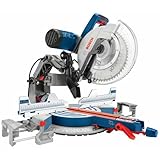
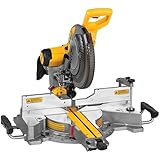
When choosing between two of the most respected 12-inch sliding compound miter saws, the Bosch GCM12SD vs DeWalt DWS779, professionals and serious DIYers are often divided. Both tools offer power, precision, and durability, yet they cater to slightly different needs. In this in-depth comparison, we evaluate every key feature, from motor strength to dust collection, to determine which saw provides the greatest long-term value.

Contents
Differences Between Bosch GCM12SD vs DeWalt DWS779
Below is a summary of the specifications:
Motor Power and Cutting Performance
Both saws feature a 15-amp motor capable of driving the blade at 3,800 RPM, offering the torque required for cutting through hardwoods, softwoods, engineered lumber, and trim materials. On paper, they are evenly matched, but real-world performance reveals subtle differences.
The Bosch GCM12SD pairs its motor with a unique axial-glide cutting mechanism, which eliminates the traditional rail system and replaces it with articulating arms. This design provides unmatched smoothness, reduced resistance, and precision, even during long crosscuts. It also reduces wear over time, keeping performance consistent.
The DeWalt DWS779, with its traditional dual-rail slide, is reliable and strong. It maintains consistent cutting speed across heavy-duty projects, but it requires more clearance space at the rear, which can be restrictive in small workshops.
Winner: Bosch GCM12SD – Its axial-glide system provides smoother operation and better long-term consistency.
Cutting Capacity and Versatility
The Bosch GCM12SD boasts a 14-inch horizontal crosscut capacity, slightly larger than the DeWalt’s 13.75-inch crosscut, which benefits framing and wide board cuts. In vertical cutting, however, the DeWalt DWS779 edges ahead with 6.75 inches of vertical capacity, compared to Bosch’s 6.5 inches, making it slightly better for tall baseboards and vertical crown molding.
Both saws excel at compound cuts, handling bevels and miters simultaneously, ideal for crown molding and detailed trim work. The Bosch axial-glide mechanism gives it greater cutting smoothness, while the DeWalt’s tall fence design provides added stability for vertical cuts.
Winner: Tie – Bosch wins in horizontal capacity; DeWalt wins in vertical cutting.

Miter and Bevel Adjustments
The Bosch GCM12SD allows a miter range of 52° left and 60° right, while the DeWalt DWS779 allows 50° left and 60° right. The wider left miter capacity on Bosch provides slightly more flexibility for angled cuts.
On bevel adjustments, the Bosch tilts 47° in both directions, and the DeWalt tilts 48° in both directions. Both provide robust flexibility for compound bevel work. Bosch, however, includes front-positioned bevel controls, eliminating the need to reach around the saw for adjustments, which improves workflow.
Winner: Bosch GCM12SD – More refined adjustment system and slightly wider miter range.
Precision and Accuracy
Accuracy is where Bosch clearly sets itself apart. Its axial-glide fence system ensures consistent alignment, reducing play in the mechanism and providing repeatable cuts over years of use. It maintains accuracy even under heavy workloads, with precision detents and smooth adjustments.
The DeWalt DWS779 is no slouch, offering accurate cuts with its stainless-steel miter detent plate featuring 10 positive stops. However, it lacks Bosch’s glide innovation, which gives the Bosch an advantage in long-term precision.
Winner: Bosch GCM12SD – Engineered for superior accuracy and long-lasting reliability.
Build Quality and Portability
The Bosch GCM12SD is built like a tank, with robust steel and heavy-duty construction that ensure durability even in demanding shop conditions. However, this ruggedness comes at a cost—its 88-pound weight makes it significantly heavier and less portable.
The DeWalt DWS779, by contrast, weighs 67 pounds, making it easier to move between job sites. Despite being lighter, it still delivers excellent durability with a solid base and reinforced components that hold up under tough use.
Winner: DeWalt DWS779 – Easier to transport and better suited for mobile contractors.

Dust Collection Efficiency
Bosch leads this category with its 90% dust collection efficiency when paired with a shop vacuum. The optimized chute captures sawdust effectively, keeping the workspace cleaner and reducing airborne particles.
The DeWalt DWS779 achieves around 75% dust collection, which is decent but less efficient compared to Bosch. Users often find themselves needing additional cleanup after heavy use.
Winner: Bosch GCM12SD – Superior dust management system enhances both safety and cleanliness.
Ease of Use and Adjustability
Bosch’s front-mounted bevel controls, compact axial-glide mechanism, and ergonomic handle design make it extremely user-friendly. The absence of rear rails reduces the saw’s footprint by up to 12 inches, freeing up valuable bench space.
The DeWalt DWS779 has a more traditional setup. While simple to use, the rear bevel adjustment is less convenient, and the sliding rails require more clearance, limiting placement in tighter shops.
Winner: Bosch GCM12SD – Compact design and ergonomic adjustments create a more efficient workflow.
Quick Rundown Of Bosch GCM12SD

Quick Rundown Of DeWalt DWS779

Conclusion
Both the Bosch GCM12SD and the DeWalt DWS779 are outstanding miter saws, each excelling in different areas. The Bosch offers unmatched precision, superior dust collection, and a space-saving axial-glide system, making it ideal for professional workshops where accuracy and efficiency are top priorities. On the other hand, the DeWalt DWS779 provides excellent cutting power at a more affordable price, with a lighter build that makes it perfect for jobsite mobility.
Overall Winner: Bosch GCM12SD – With its advanced engineering, smoother cutting action, and superior dust management, the Bosch GCM12SD stands as the more capable and professional-grade choice for users who demand the highest level of performance and accuracy.