
Portable power stations are increasingly popular for camping, road trips, outdoor activities, and emergency use at home. Among the most compact and affordable models, the Bluetti EB3A vs Jackery Explorer 240 stand out as two of the most sought-after entry-level power solutions.
While both are portable and beginner-friendly, they differ significantly in terms of capacity, charging speed, output ports, and overall usability. This detailed comparison breaks down every aspect of these two models to help you decide which one is the better investment.

Contents
Differences Between Bluetti EB3A vs Jackery Explorer 240
Below is a summary of the specifications:
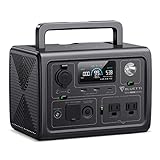
Battery Capacity and Expandability
The Bluetti EB3A is equipped with a 268Wh LiFePO₄ battery, which not only provides slightly more energy than the Jackery Explorer 240 but also ensures exceptional longevity. With over 2,500 cycles to 80% capacity, it can be used daily for years without significant degradation. Unfortunately, the EB3A does not support battery expansion, but its durability gives it a long-term edge.
The Jackery Explorer 240 comes with a 240Wh lithium-ion NMC battery, a chemistry known for being lightweight but with a much shorter lifespan of around 500 cycles. It is suitable for occasional use but lacks the long-term reliability of Bluetti’s LiFePO₄ system. Expansion is also not available.
Winner: Bluetti EB3A – With greater capacity and a far superior cycle life, the EB3A is more reliable and durable.

Power Output and Device Compatibility
The Bluetti EB3A offers a 600W AC inverter with 1,200W surge capacity, which is three times more powerful than the Jackery Explorer 240. This makes it capable of running not just small devices but also higher-demand electronics like mini-fridges, small kitchen appliances, or even CPAP machines. The EB3A features an impressive 9 total outputs, including two AC outlets, a 100W USB-C PD port for laptops, two USB-A ports, a 12V car outlet, two 5521 DC outputs, and a 15W wireless charging pad.
The Jackery Explorer 240, in contrast, provides only 200W continuous AC output with 400W surge capacity. This significantly limits its compatibility, restricting it to small electronics like smartphones, tablets, cameras, and drones. Its 4 ports include just one AC outlet, two USB-A ports, and a 12V car outlet, leaving fewer options for powering multiple devices.
Winner: Bluetti EB3A – With more than double the rated output and a wider variety of ports, Bluetti clearly surpasses Jackery in versatility.
Charging Speeds and Solar Integration
The Bluetti EB3A is designed for speed. With 350W AC fast charging, it can recharge from 0–80% in around 30 minutes and fully recharge in just over 1 hour. It also supports up to 200W solar input, allowing for renewable recharging in approximately 1.5–2 hours under optimal conditions. This makes it ideal for off-grid users and outdoor adventurers.
The Jackery Explorer 240 charges much slower. With a standard AC wall charger, it requires about 5.5 hours to fully recharge. Its solar input is capped at just 60W, meaning even with Jackery’s SolarSaga panels, it takes up to 7 hours in good sunlight.
Winner: Bluetti EB3A – Significantly faster recharging, both via AC and solar, makes Bluetti much more efficient for frequent and off-grid use.

Design, Portability, and Build Quality
The Bluetti EB3A weighs 10.1 lbs (4.6 kg), which makes it heavier than the Jackery Explorer 240 but still manageable for most users. Its design is compact, durable, and equipped with a foldable handle for easy transport. While slightly bulkier, its features justify the added weight.
The Jackery Explorer 240 is lighter at 6.6 lbs (3 kg), making it one of the easiest power stations to carry. Its bright orange-and-black design is instantly recognizable, and the build quality is rugged enough for light outdoor use. However, its compact size comes at the cost of lower capacity and output.
Winner: Jackery Explorer 240 – For those prioritizing lightweight portability, Jackery is easier to carry, though Bluetti offers more power in exchange for extra weight.
Smart Features and App Integration
The Bluetti EB3A includes Wi-Fi and Bluetooth app integration, allowing users to monitor battery status, adjust settings, control output, and receive firmware updates remotely. This feature enhances convenience, especially during long camping trips or emergency situations.
The Jackery Explorer 240 lacks smart functionality. It only provides a simple LCD display to show remaining battery percentage and charging/discharging status.
Winner: Bluetti EB3A – Its smart connectivity makes it more advanced and user-friendly in today’s tech-driven world.
Quick Rundown Of Bluetti EB3A

Quick Rundown Of Jackery Explorer 240
No products found.
Conclusion
Both the Bluetti EB3A and the Jackery Explorer 240 serve as compact portable power stations, but they are designed for very different users.
The Jackery Explorer 240 is best suited for those seeking an ultralight, budget-friendly solution to power small devices during short trips. Its portability and ease of use make it attractive for beginners, though its lower capacity and lack of modern features limit its overall performance.
The Bluetti EB3A, however, is the clear leader in this comparison. With a larger battery, longer lifespan, much higher output, faster charging speeds, wider port selection, and smart app integration, it is a far more capable and future-proof power station.
Overall Winner: Bluetti EB3A – For anyone who values performance, versatility, and long-term reliability, the EB3A is the superior choice.