
Compact power stations have quickly become indispensable for outdoor enthusiasts, digital nomads, and homeowners seeking backup solutions. Two of the most compelling options in the entry-level range are the Bluetti EB3A vs EcoFlow River 2 Max.
Both promise portability, reliable LiFePO₄ battery technology, and fast charging, but they are designed for slightly different needs. In this detailed comparison, we explore their differences in capacity, output power, charging, design, and smart features to determine which unit provides greater value.

Contents
Differences Between Bluetti EB3A vs EcoFlow River 2 Max
Below is a summary of the specifications:

Battery Capacity and Expandability
The EcoFlow River 2 Max delivers a substantial 512 Wh of LiFePO₄ battery capacity, nearly double the 268 Wh of the Bluetti EB3A. This gives the River 2 Max a significant advantage for powering devices longer, making it more suitable for extended camping trips, long workdays off-grid, or emergency backup.
Both rely on LiFePO₄ chemistry, ensuring excellent thermal stability and longevity. The EB3A is rated for 2,500+ charge cycles to 80% capacity, while the River 2 Max pushes that endurance further with 3,000+ cycles. Neither model supports external battery expansion, which means users must rely solely on the built-in storage.
Winner: EcoFlow River 2 Max, with its much higher capacity and longer lifespan.
Power Output and Device Compatibility
The Bluetti EB3A provides 600 W continuous output with a 1,200 W surge capacity, slightly higher than the 500 W continuous and 1,000 W surge of the River 2 Max. In practice, this means the EB3A can briefly power higher-demand appliances, giving it more versatility in short bursts.
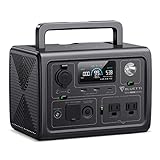
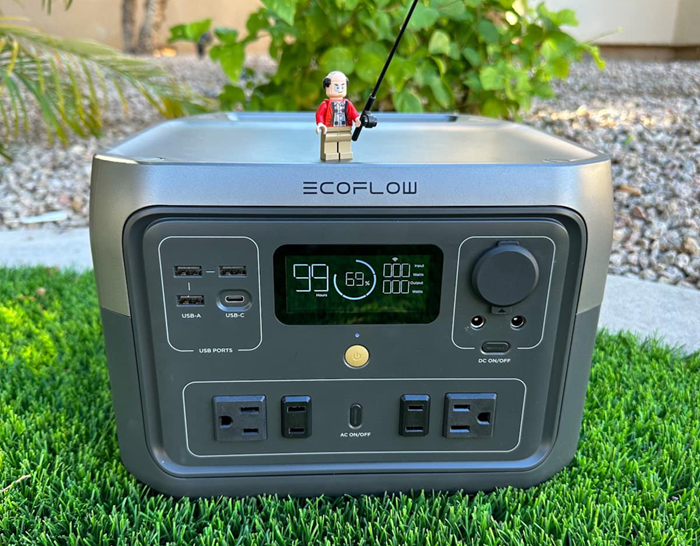
However, the EcoFlow River 2 Max compensates by offering more outlets and ports. With four AC outlets, three USB-A ports, one USB-C port (100 W), and one DC carport, it supports more devices simultaneously. By comparison, the EB3A features two AC outlets, two USB-A ports, one USB-C port (100 W), one carport, and a wireless charging pad.
Winner: Tie – The EB3A has higher peak output, but the River 2 Max provides more connectivity and flexibility.
Charging Speeds and Solar Integration
The Bluetti EB3A is among the fastest-charging portable power stations in its category. With 430 W AC input, it charges from 0% to 80% in just 30 minutes and fully recharges in around 45 minutes. It supports up to 200 W solar input, enabling a 2–3 hour solar recharge with good conditions.
The EcoFlow River 2 Max also excels in this area, charging from 0% to 100% in just over an hour via 660 W AC input. With solar, it supports up to 220 W, meaning recharge times are similar to the EB3A, around 2–3 hours depending on sunlight.
Winner: EcoFlow River 2 Max, offering faster full AC recharge and slightly higher solar input.

Design, Portability, and Build Quality
The Bluetti EB3A is lighter at 10.14 lbs (4.6 kg), making it easier to carry for short trips, quick outdoor activities, or use in smaller spaces. Its compact design includes a built-in wireless charging pad, adding convenience for smartphone users.
The EcoFlow River 2 Max, while heavier at 13.4 lbs (6.1 kg), is still highly portable and provides more ports and larger capacity, which justifies the extra weight. Both models are constructed with durable housings and feature ergonomic handles for transport.
Winner: Bluetti EB3A, for superior portability and added wireless charging functionality.
Smart Features and App Integration
Both the Bluetti EB3A and the EcoFlow River 2 Max integrate with mobile apps via Bluetooth and Wi-Fi, offering real-time monitoring, customizable charging settings, and firmware updates. The Bluetti app emphasizes control over charging speed and detailed statistics, while the EcoFlow app excels with its clean interface and ecosystem integration, making it ideal for users who own multiple EcoFlow devices.
Winner: Tie, as both deliver reliable app-based control and monitoring.
Quick Rundown Of Bluetti EB3A

Quick Rundown Of EcoFlow River 2 Max
Conclusion
The Bluetti EB3A and the EcoFlow River 2 Max represent two different priorities in portable power. The EB3A shines in portability, peak output performance, and ultra-fast charging, making it perfect for short trips, light users, or those who value compact convenience.
The EcoFlow River 2 Max, however, takes the crown for capacity, port variety, and overall endurance. With nearly double the storage, a longer cycle life, and more device connections, it is the better choice for extended off-grid activities, camping, and emergency backup.
Overall Winner: EcoFlow River 2 Max – While both units are excellent, the River 2 Max delivers superior storage, versatility, and longevity, making it the more capable all-rounder for users seeking reliable off-grid power.