
Portable power stations have become indispensable tools for outdoor enthusiasts, homeowners seeking backup power, and digital nomads alike. In the compact category, two names stand out: the Anker 535 vs Bluetti EB3A. Both offer LiFePO₄ batteries, reliable performance, and multiple outputs, but they cater to different usage needs.
In this comprehensive comparison, we analyze their battery performance, output capacity, charging speeds, portability, expandability, and smart features to determine which model provides the better balance of power and portability.

Contents
Differences Between Anker 535 vs Bluetti EB3A
Below is a summary of the specifications:

Battery Capacity and Expandability
The Anker 535 features a 512Wh LiFePO₄ battery, which offers over 3,000 cycles to 80% capacity. This makes it highly durable for long-term use, providing twice the storage capacity of the Bluetti EB3A. Its larger battery allows it to run appliances for longer, making it more suitable for extended trips or heavier loads.
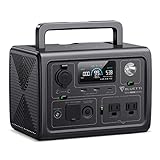
The Bluetti EB3A, by contrast, has a 268Wh LiFePO₄ battery with around 2,500 cycles. While the capacity is smaller, it still provides ample energy for short camping trips, light emergency use, or daily device charging.
Neither unit offers expandability, so what you buy is what you get. Users looking for extended runtimes will naturally gravitate towards the Anker 535 due to its bigger storage.
Winner: Anker 535 – Its significantly larger battery capacity ensures longer-lasting performance for demanding users.

Power Output and Device Compatibility
The Bluetti EB3A takes the lead in raw inverter power, with a 600W continuous output and 1200W surge capacity. This allows it to handle more demanding appliances like blenders, coffee makers, or small CPAP machines. It also offers a 100W USB-C port, making it ideal for high-powered laptops and gaming devices. With nine output options, including a wireless charging pad and dual DC 5521 ports, it supports a wider range of electronics.
The Anker 535, while offering lower inverter strength at 500W continuous and 750W surge, provides four AC outlets, which is double that of the EB3A. It also includes three USB-A ports, one USB-C PD port (60W), and a 12V car socket, making it practical for charging multiple smaller devices simultaneously.
While the Anker has more AC sockets, the Bluetti’s higher wattage and superior USB-C output make it more versatile for modern electronics and mid-sized appliances.
Winner: Bluetti EB3A – Its stronger inverter and diverse port selection give it a broader device compatibility edge.
Charging Speeds and Solar Integration
The Bluetti EB3A dominates this category with its Turbo charging mode, which can recharge the unit from 0–80% in about 30 minutes and fully charge in just 1 hour using AC. It also supports up to 200W of solar input, making it one of the fastest and most efficient compact stations for off-grid use.
The Anker 535 supports up to 120W solar charging and requires around 2.5 hours to fully recharge via AC. While efficient, it cannot match the rapid recharging speed or higher solar intake of the EB3A.
Winner: Bluetti EB3A – Faster AC recharging and higher solar input capacity give it a clear advantage for off-grid users.

Design, Portability, and Build Quality
The Anker 535 weighs 16.5 lbs (7.5 kg), making it considerably heavier than the 10.1 lbs (4.6 kg) Bluetti EB3A. For users who prioritize portability and lightweight travel, the EB3A is easier to carry and manage.
In terms of build, both models use rugged casings and reinforced handles designed for outdoor conditions. The Anker’s larger footprint accommodates its bigger battery and four AC outlets, while the Bluetti maintains a more compact design despite its robust inverter.
Winner: Bluetti EB3A – Its lighter weight and compact design make it easier to transport, especially for frequent travelers.
Smart Features and App Integration
The Bluetti EB3A comes with Bluetooth and Wi-Fi app control, allowing users to monitor real-time power usage, adjust charging modes, and even update firmware directly from their smartphone. This smart integration adds modern convenience and functionality.
The Anker 535, while reliable, lacks app integration and relies solely on its built-in LCD display for monitoring. While simple and effective, it does not offer the same level of control or remote accessibility.
Winner: Bluetti EB3A – Smart app functionality enhances usability and monitoring capabilities.
Quick Rundown Of Anker 535

Quick Rundown Of Bluetti EB3A
Conclusion
The Anker 535 PowerHouse is the stronger option for users who value higher battery capacity and more AC outlets. Its larger energy reserve makes it ideal for longer camping trips or emergency scenarios where runtime is crucial.
The Bluetti EB3A, on the other hand, excels in power output, charging speed, solar efficiency, portability, and smart features. It is the more modern and versatile choice for users who need quick recharges, diverse port compatibility, and advanced app integration.
Overall Winner: Bluetti EB3A – While the Anker 535 offers more storage, the Bluetti EB3A’s superior inverter power, rapid charging, solar capacity, and smart technology make it the more well-rounded option for today’s portable power needs.