
The demand for portable power stations has grown rapidly as more people turn to outdoor adventures, RV living, and home backup solutions. Among Anker’s lineup, two models stand out for users looking at the entry-to-mid level range: the Anker 521 vs Anker Solix C300. While both are compact and designed for everyday portability, they offer different strengths when it comes to capacity, output, charging speed, and smart features.
In this in-depth comparison, we’ll evaluate the Anker 521 vs Solix C300 across all major aspects—battery performance, expandability, ports, charging integration, design, and intelligent features—to determine which one provides the best value for your needs.

Contents
Differences Between Anker 521 vs Solix C300
Below is a summary of the specifications:

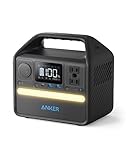
Battery Capacity and Expandability
The Anker 521 comes with a 256Wh LiFePO4 battery, providing enough power for basic needs such as charging smartphones, tablets, laptops, small fans, and cameras. This makes it an excellent choice for day trips, picnics, or short outdoor activities. However, the lack of expandability means users are limited to this capacity.
The Solix C300 slightly improves capacity with a 299Wh LiFePO4 battery, offering around 15% more storage than the 521. While still compact, this increase allows for longer runtimes—for example, it can run a mini-fridge for several more hours or charge a laptop multiple times. Like the 521, it does not support additional battery modules, so users must rely on the built-in storage.
Winner: Anker Solix C300
With a larger 299Wh capacity, the C300 delivers longer runtimes, making it the better option for those who want a little extra power without sacrificing portability.

Power Output and Device Compatibility
The Anker 521 offers 200W continuous AC output and 400W surge, sufficient for powering small devices such as laptops, routers, portable speakers, and lighting equipment. It features 2 AC outlets, 2 USB-A ports, 1 USB-C (60W), and 1 carport, covering most everyday needs.
The Solix C300 improves performance with 300W continuous AC output and a 600W surge rating, allowing it to handle more demanding appliances like CPAP machines, small projectors, or compact kitchen devices. It also provides a more versatile port selection: 2 AC outlets, 2 USB-A ports, 2 USB-C ports (one 100W and one 30W), and 1 carport, giving users greater flexibility for modern electronics.
Winner: Anker Solix C300
With higher output wattage and expanded USB-C options, the C300 outshines the 521 for powering multiple devices simultaneously and handling slightly heavier loads.
Charging Speeds and Solar Integration
The Anker 521 charges fully in about 2.5 hours via wall outlet and supports up to 65W solar input, taking around 4–5 hours under optimal sunlight. While this is adequate for casual users, it may feel slow for those who rely heavily on solar energy during outdoor stays.
The Solix C300 features HyperFlash AC charging, which allows it to recharge from 0–100% in just 1.5 hours using AC. This is a major advantage for users who need quick turnarounds. Additionally, it supports up to 100W of solar input, reducing recharge times under sunlight to around 3–4 hours when using compatible panels.
Winner: Anker Solix C300
The C300’s faster AC recharging and higher solar capacity make it far more efficient for users who need quick energy replenishment, especially during extended outdoor activities.

Design, Portability, and Build Quality
Both the 521 and C300 are designed for portability, with compact builds and weights under 9 lbs. The 521 is slightly lighter at 8.2 lbs, but the difference is marginal. Both units include reinforced handles for easy carrying, shock-resistant corners, and ventilation systems to prevent overheating during operation.
The C300 has a slightly more modern design and is marginally larger than the 521. However, its rugged exterior and premium build make it just as durable, ensuring it can handle outdoor environments, road trips, and light-duty professional use.
Winner: Tie
Both models are highly portable, rugged, and easy to carry, with only minor weight and size differences that are unlikely to affect most users.
Smart Features and App Integration
The Anker 521 is a straightforward power station without app integration. Users rely solely on its onboard LCD display, which shows essential data like battery level, input/output power, and runtime estimates. It is simple and functional but lacks remote control features.
The Solix C300 introduces smart app control via Wi-Fi and Bluetooth, allowing users to monitor power usage, adjust settings, and receive updates directly from their smartphone. This feature is especially useful for those who want greater control and convenience when managing their power station.
Winner: Anker Solix C300
With smart app integration, the C300 delivers a superior user experience, offering remote monitoring and real-time control that the 521 lacks.
Quick Rundown Of Anker 521

Quick Rundown Of Anker Solix C300
Conclusion
Both the Anker 521 and Solix C300 are excellent entry-level power stations, but they serve slightly different audiences. The 521 is a reliable, lightweight option for users who only need basic power support for day trips or emergency charging. It is simple, affordable, and effective.
The Solix C300, however, represents the next generation of compact portable power. With more capacity, faster charging, greater solar input, additional ports, and smart app integration, it clearly outshines the 521 in almost every category.
Overall Winner: Anker Solix C300
The C300’s combination of higher capacity, faster recharging, modern connectivity, and versatile ports makes it the best choice for users who want a future-ready compact power station that can handle more demanding needs with ease.