
The growing demand for portable power stations has placed compact yet powerful units like the Anker 521 vs EcoFlow River 3 at the forefront of the market. These models are designed to meet the needs of campers, digital nomads, and homeowners who require reliable backup energy. While both emphasize portability, efficiency, and clean energy storage, they differ in terms of capacity, expandability, recharging speed, and smart features.
In this detailed comparison, we examine the Anker 521 vs EcoFlow River 3 to determine which one offers the best overall value.

Contents
Differences Between Anker 521 vs EcoFlow River 3
Below is a summary of the specifications:

Battery Capacity and Expandability
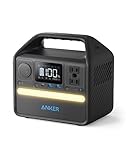
The Anker 521 PowerHouse comes with a 256Wh LiFePO₄ battery, offering solid reliability for powering everyday essentials like smartphones, tablets, laptops, and small camping appliances. With a lifespan rated at 3000 cycles, the battery retains most of its capacity even after years of use. However, it is limited by the lack of expandability, meaning users must recharge once the stored energy is depleted.
The EcoFlow River 3 also features a 256Wh LiFePO₄ battery, providing similar durability but with a major advantage—expandability. By attaching an additional battery pack, the River 3 doubles its capacity to 512Wh, making it more versatile for longer trips and emergency scenarios. This gives it a stronger long-term edge for users needing flexibility.
Winner: EcoFlow River 3 – With the ability to double its storage, it outperforms the Anker 521 in energy flexibility.

Power Output and Device Compatibility
The Anker 521 provides 200W of continuous AC output and 450W surge capability, making it well-suited for smaller devices like lights, laptops, cameras, and fans. It includes 2 AC outlets, 1 USB-C port, 2 USB-A ports, and a 12V car outlet, offering enough connectivity for most light setups.
The EcoFlow River 3, in contrast, delivers 300W of continuous output and up to 600W surge power with EcoFlow’s X-Boost technology. This makes it capable of handling devices like projectors, mini-fridges, or small kitchen appliances, which the Anker 521 cannot reliably power. It also features 8 ports, including 2 AC outlets, USB-C, USB-A, a car outlet, and 2 DC5521 outputs, covering a broader range of devices.
Winner: EcoFlow River 3 – With higher wattage, surge power, and additional ports, it is more versatile for demanding use.
Charging Speeds and Solar Integration
The Anker 521 PowerHouse can be charged through wall AC and USB-C PD simultaneously, achieving a full charge in about 2.5 hours. For solar input, it supports up to 65W, recharging in around 4–5 hours under optimal sunlight conditions. While efficient for casual use, it lags behind more modern competitors.
The EcoFlow River 3 redefines charging speed with its X-Stream fast charging, capable of recharging from 0–100% in just 1 hour via wall AC power. Its 110W solar input nearly doubles the capacity of the Anker 521, enabling faster renewable charging in 2.5–3 hours. For users who prioritize quick turnaround or off-grid solar integration, the River 3 offers a decisive advantage.
Winner: EcoFlow River 3 – Faster wall charging and stronger solar input make it a leader in this category.

Design, Portability, and Build Quality
The Anker 521 weighs 8.2 lbs (3.7 kg) and comes in a compact, rugged design suitable for camping and everyday portability. Its durable casing is designed to resist wear, making it a dependable choice for outdoor use. However, it is slightly heavier than the River 3 despite having similar battery capacity.
The EcoFlow River 3 is lighter at 7.8 lbs (3.5 kg) and 30% more compact than previous River models. With IP54 dust and water resistance, it is better equipped for outdoor adventures in harsher conditions. Its quiet operation at under 30 dB also makes it practical for indoor or overnight use.
Winner: EcoFlow River 3 – With lighter weight, weather resistance, and a quieter profile, it excels in portability and outdoor readiness.
Smart Features and App Integration
The Anker 521 PowerHouse does not include smart app functionality, meaning users must manage the device directly through its built-in display. While simple and reliable, it lacks the remote monitoring and advanced energy management that modern users often expect.
The EcoFlow River 3, however, integrates seamlessly with the EcoFlow App via Wi-Fi and Bluetooth. This allows real-time monitoring of input and output, firmware updates, and even smart charging customization. It can also connect with other EcoFlow products, making it a part of a broader ecosystem for home backup or renewable energy use.
Winner: EcoFlow River 3 – With its app-based smart controls, it far outperforms the Anker 521 in connected features.
Quick Rundown Of Anker 521

Quick Rundown Of EcoFlow River 3
Conclusion
The battle between the Anker 521 PowerHouse and the EcoFlow River 3 highlights two strong contenders in the compact portable power category.
The Anker 521 offers simplicity, rugged design, and reliable performance for light users who need to power small electronics on short trips. It is an excellent entry-level unit for those who prefer straightforward functionality without extra features.
The EcoFlow River 3, however, is the clear winner in this comparison. With faster charging, greater power output, solar efficiency, expandability, and app integration, it is a far more versatile and future-ready option. For users who demand flexibility, quick turnaround, and smart features, the River 3 sets a higher standard.
Overall Winner: EcoFlow River 3 – Its combination of power, expandability, and smart connectivity makes it the superior choice for anyone seeking a compact yet highly capable portable power station.