
When it comes to portable power solutions, Jackery is a well-known and trusted name, offering high-performance, reliable, and easy-to-use power stations. Among their best-selling models, the Jackery Explorer 240 vs Explorer 300 stand out. These compact power stations are ideal for outdoor enthusiasts, travelers, and individuals seeking backup power. However, choosing the right one can be tricky.
This detailed comparison will explore the differences, advantages, and unique features of the Explorer 240 and Explorer 300 to help you decide which one is the best for your needs.

Contents
Differences Between Jackery Explorer 240 vs Explorer 300
Below is a summary of the specifications:

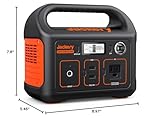
Battery Capacity and Expandability
The Jackery Explorer 240 is equipped with a 240Wh lithium-ion battery, providing a compact yet powerful solution for powering small devices. Ideal for charging smartphones, tablets, laptops, and running small appliances like LED lights or mini-fans, the 240Wh capacity is perfect for short outdoor trips, emergencies, or light-duty backup power.
For those who need more power, the Explorer 300 offers a larger 296Wh lithium-ion battery, enabling it to run slightly higher-wattage devices like CPAP machines, mini-fridges, and small electric appliances. With the added battery capacity, the Explorer 300 provides a longer runtime, making it better for off-grid living or for those who need more robust energy for devices like coffee makers and small electric tools.
Both models offer good battery technology, but the Explorer 300 wins due to its larger battery and better energy storage for more demanding devices.
Winner: Jackery Explorer 300
With a 296Wh battery compared to 240Wh, the Explorer 300 offers a more powerful energy solution for users requiring extended use and higher energy demands.

Power Output and Device Compatibility
The Explorer 240 provides a 200W continuous AC output, with a surge capacity of 400W. This level of power is sufficient for charging basic devices and small appliances like laptops, smartphones, and tablets. Its output is ideal for light-duty power needs and users who require energy for a short duration. Additionally, it comes with 1 AC outlet, 2 USB-A ports, and 1 DC carport, offering flexible charging and powering options for various devices.
The Explorer 300 offers a 300W continuous AC output, with surge capabilities up to 500W, enabling it to power larger devices such as mini-fridges, small blenders, coffee makers, and larger power tools. The additional USB-C port in the Explorer 300 provides enhanced charging for modern electronics like smartphones and laptops that require USB-C charging. It also features 1 AC outlet, 2 USB-A ports, 1 USB-C port, and 1 DC carport, offering even more flexibility for diverse charging needs.
Winner: Jackery Explorer 300
With 300W continuous output, 500W surge, and an additional USB-C port, the Explorer 300 offers more versatility and is capable of powering a wider range of high-power devices.
Charging Speeds and Solar Integration
The Explorer 240 offers an AC charging time of 5 hours, reaching 0 to 100% in this short period. This is ideal for users who need a quick recharge, especially if they are on the go. The Explorer 240 also supports up to 60W solar input, which enables users to recharge the power station in about 7 hours with compatible solar panels. This makes the Explorer 240 a solid choice for off-grid use, although it takes longer to recharge via solar.
The Explorer 300 takes slightly longer to recharge via AC, requiring about 6 hours to reach 0 to 100%, but it supports up to 100W of solar input, which allows for quicker solar recharging. With optimal sunlight, the Explorer 300 can be fully charged in 6 hours, making it a better choice for users who rely on solar power for extended off-grid activities.
Winner: Jackery Explorer 240
With a faster AC charging time of 5 hours, the Explorer 240 edges out the Explorer 300 in terms of quick recharges.

Design, Portability, and Build Quality
The Explorer 240 is known for its compact and lightweight design, weighing only 6.6 lbs (3 kg). This makes it highly portable and easy to carry during outdoor trips, camping, or hiking. Despite its smaller size, the unit is designed with rugged durability, including reinforced corners and a durable plastic casing that can withstand the rigors of outdoor environments. Its compact design ensures it fits easily into backpacks, vehicles, or small storage spaces.
The Explorer 300 weighs 7.1 lbs (3.2 kg), making it slightly heavier but still relatively portable considering its larger capacity and output. It features a similarly durable build, with reinforced handles and a rugged outer casing. While it is slightly bulkier, it still maintains a compact footprint that can fit into most spaces, though its added weight makes it a bit less convenient for users who prioritize portability.
Both models are built to handle the demands of outdoor activities, but the Explorer 240 is the winner in this category due to its lightweight and compact design, making it the more portable option.
Winner: Jackery Explorer 240
The Explorer 240 wins for portability with its lighter weight and compact design, making it the better option for those who need to move their power station frequently.
Smart Features and App Integration
Although neither the Explorer 240 nor the Explorer 300 offers app control, both models come equipped with essential smart features that make them user-friendly and efficient for outdoor and emergency use. Both feature battery management systems (BMS) that ensure safe operation by regulating voltage, current, and temperature. Additionally, the Explorer 300 and Explorer 240 both provide real-time power monitoring through their LCD screens, which display battery status, charging time, and output wattage.
This smart display feature helps users keep track of their energy usage and optimize their charging times, ensuring the unit is ready when needed.
Winner: Tie
Both models feature essential smart features, with real-time monitoring and a reliable battery management system, making this category a tie.
Quick Rundown Of Jackery Explorer 240

Quick Rundown Of Jackery Explorer 300
Conclusion
The Jackery Explorer 240 and Explorer 300 both offer impressive features, but they cater to different user needs. The Explorer 240 is perfect for those looking for an affordable, lightweight power station that can handle basic devices and short-term use. It excels in portability and is ideal for light-duty applications like camping or emergency backup.
On the other hand, the Explorer 300 is a better option for users who require more power for devices like mini-fridges, coffee makers, and small appliances. With a larger battery capacity and more output, it is ideal for off-grid living, longer trips, and extended use.
Overall Winner: Jackery Explorer 300
The Explorer 300 wins due to its higher power output, larger battery, and the addition of a USB-C port, making it more versatile and capable of handling a wider range of devices for longer durations.